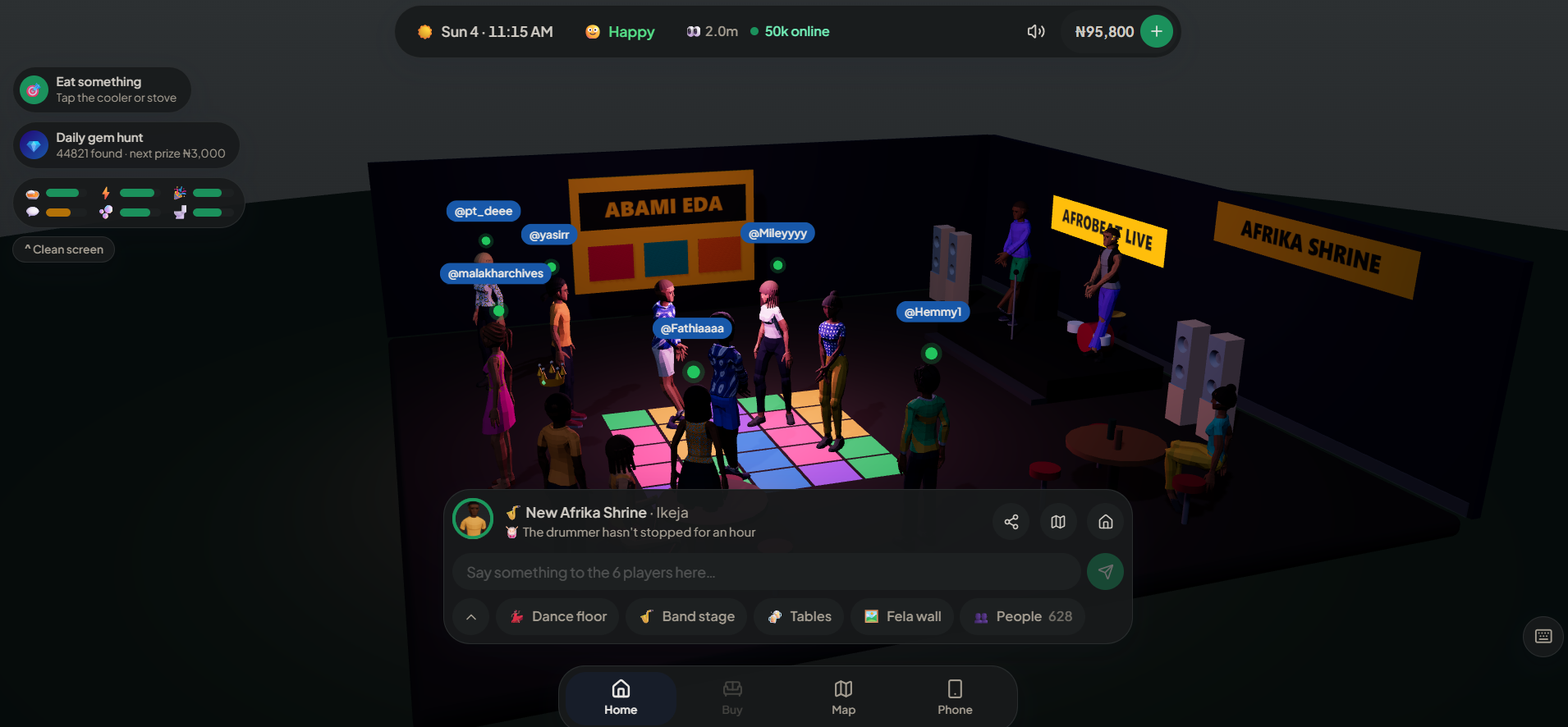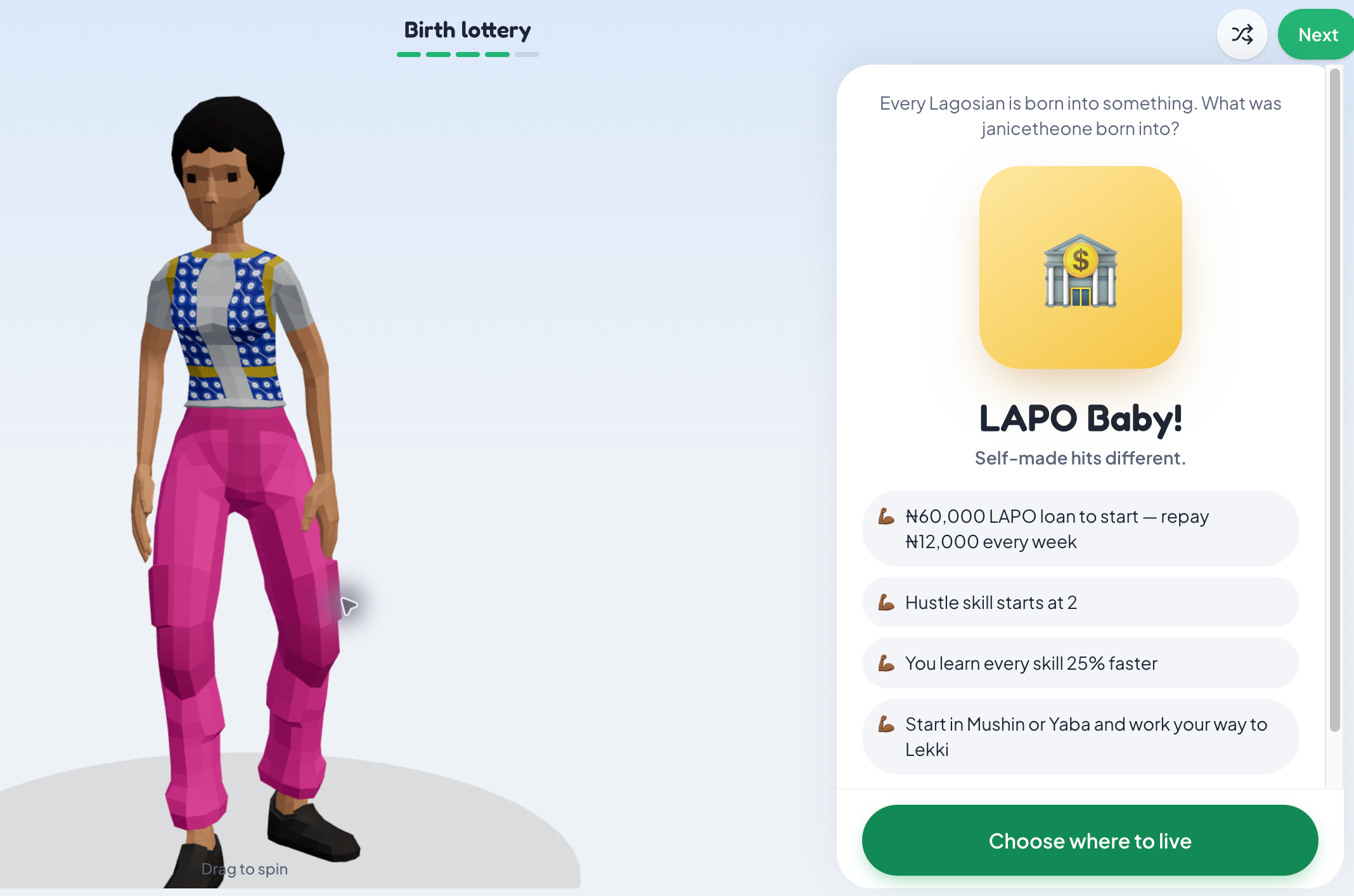
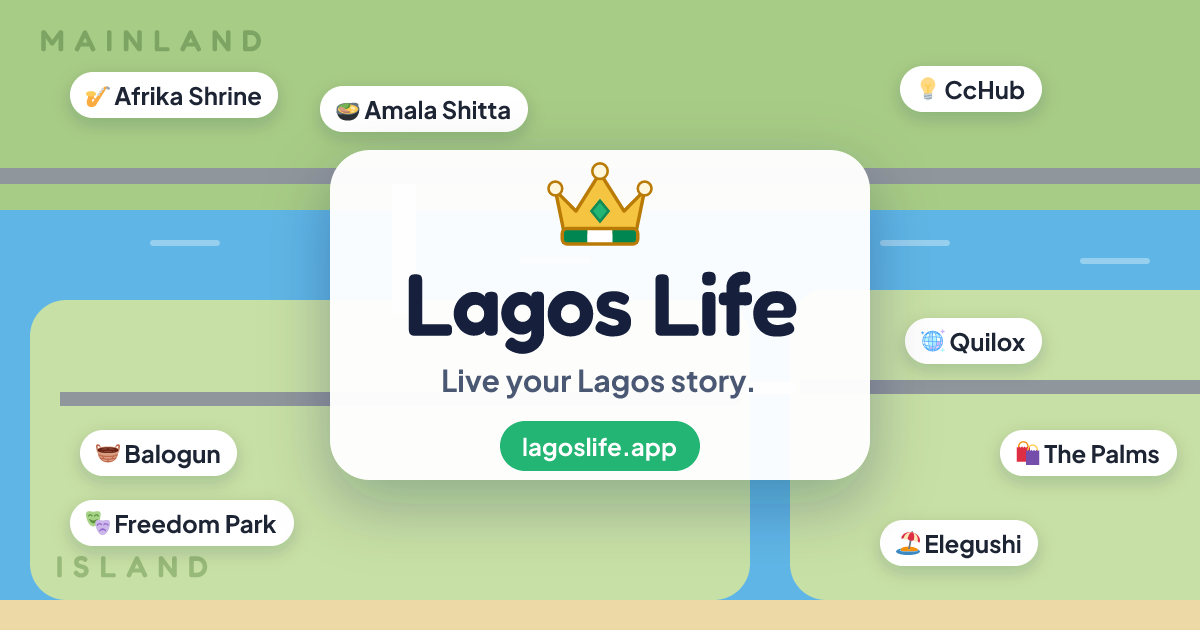
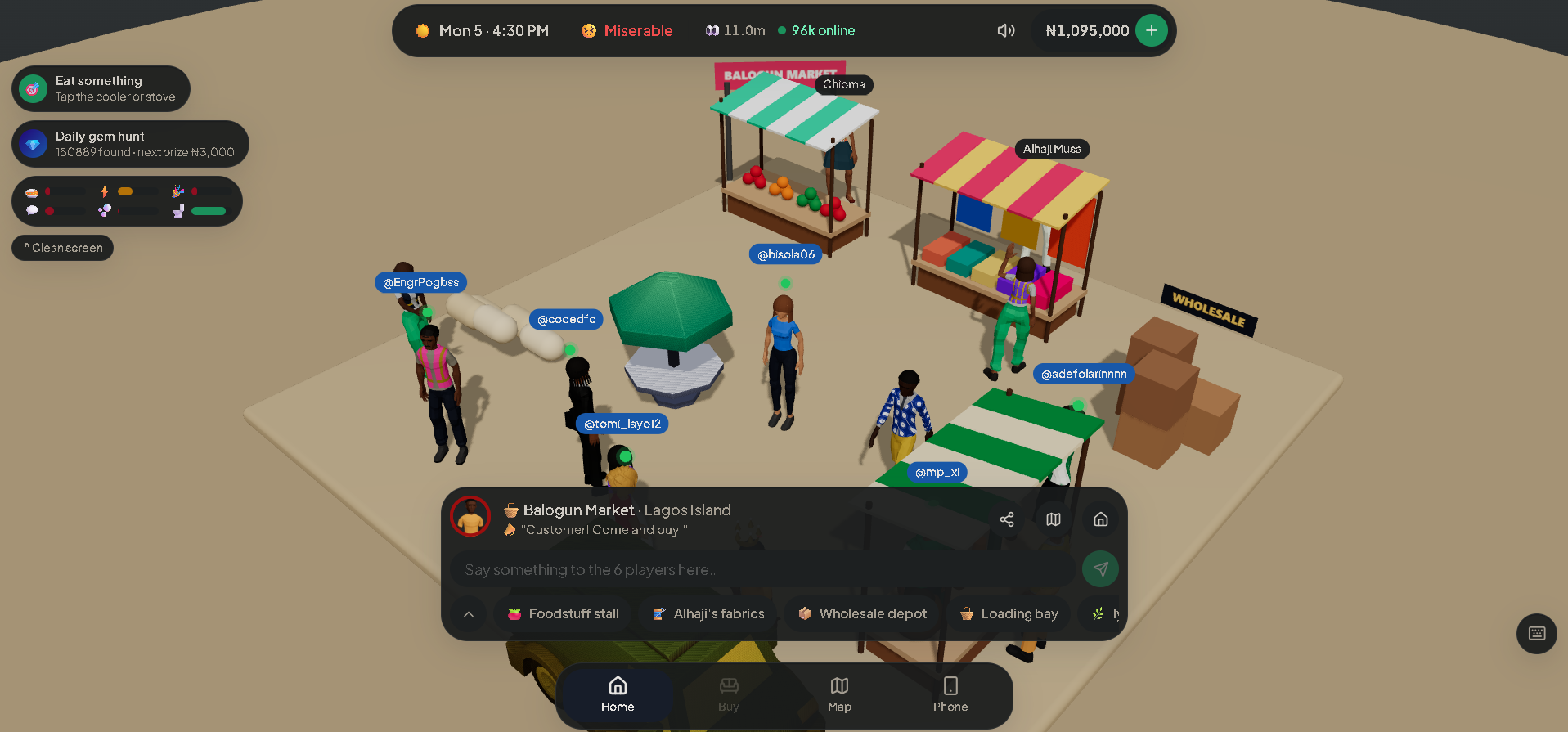
LagosLife is a multiplayer life simulation you open in a web browser. You create a character, find work, manage a home and meet other people in a fictional version of Lagos. Playing is free to start; the official site is lagoslife.app. The easiest pitch is a second life in a city that gives you plenty to talk about. [1]
The joke is immediately understandable: you escape your day for a game, then discover that your character also needs an income and somewhere to live. Once friends start comparing their fictional fortunes, even a routine decision can become a story. That is our reading of the attraction behind the launch buzz.
What do you actually do in LagosLife?
Early coverage describes a loop of earning, spending, maintaining your character and exploring. ARISE News reports contrasting “Nepo” and “Lapo” starting circumstances, alongside familiar destinations such as Amala Shitta and Quilox. Those references turn a broad life-sim idea into something recognisably local. Exact starting conditions and mechanics can change as the game is updated. [5]
A useful way to approach that loop is to choose a small goal: get comfortable, meet someone, or see another corner of the map. You do not need to arrive with a complete strategy. The entertainment comes partly from watching your plan meet the world, and partly from comparing what happened with somebody else’s experience.
It also helps to set expectations. LagosLife is a social simulation rather than a documentary of Lagos. A screenshot of a crowded venue tells you something about the game’s setting; it does not tell you what every resident of the real city is like. For practical starting points, our Wiki separates the official links, money basics and places to explore.
Did LagosLife really become huge overnight?
“Overnight” captures how suddenly the name seemed to fill a feed. The public launch trail actually spans several days. Rayhamen introduced Lagos Life Sims on X on 1 October 2026, describing inspiration from The Sims 3 and the Nigerian browser game Lagos Run. An early reply celebrated having four neighbours. [2] [3]
By 4 October, a dashboard image posted by the creator showed 1,002,316 total players and 109,871 online. Techpoint’s 5 October report also described the game crossing a million players within its first few days. These are developer-reported milestones, not independently audited counts of unique people. [4] [1]
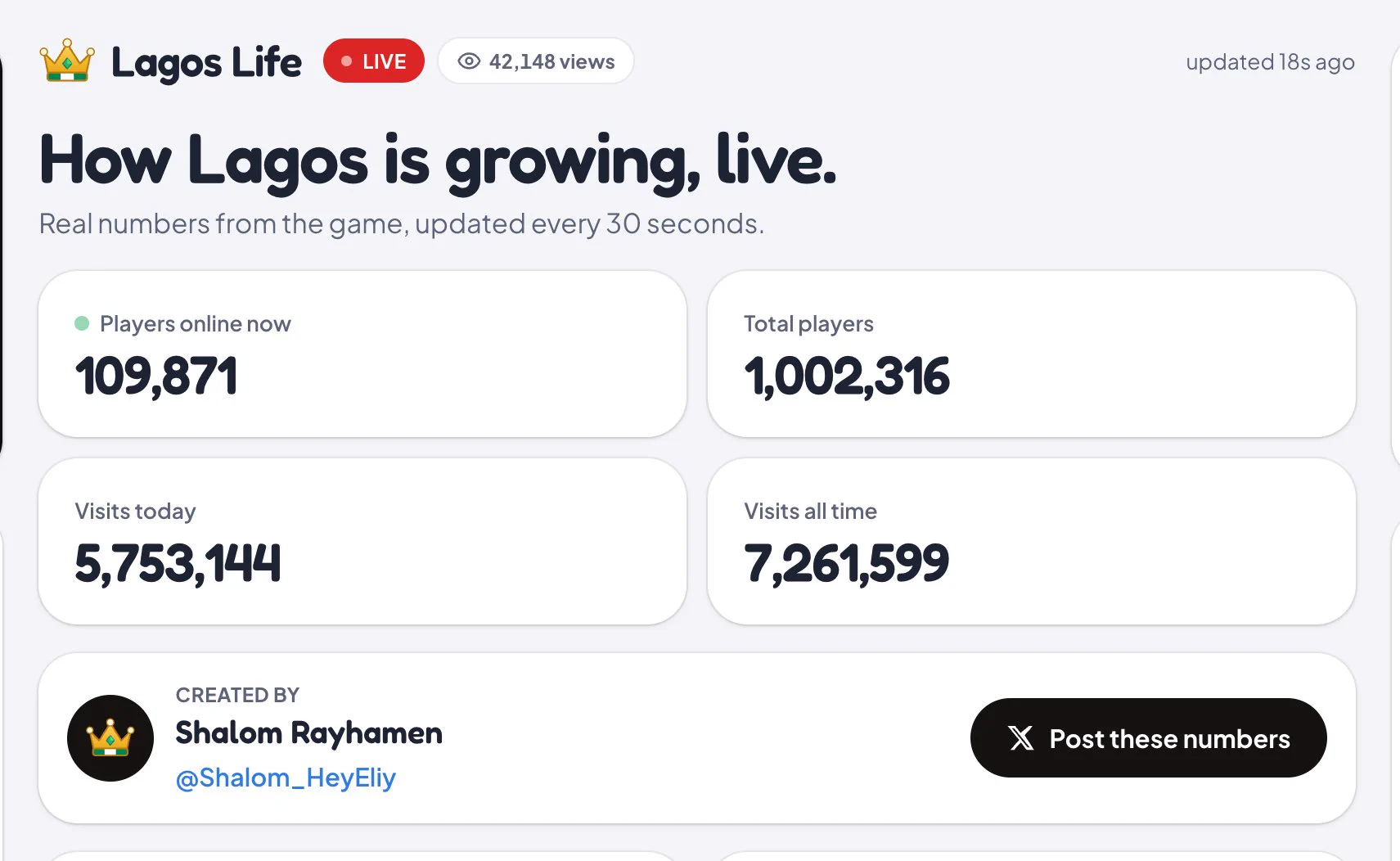
Keep the labels separate: total players, people online and visits measure different things. Repeat visits can come from the same person, and a cumulative counter does not show how many people will return next week. The evidence supports a rapid launch surge. It does not yet establish long-term retention.
Why did LagosLife spread so quickly?
First, the invitation is easy to act on. BusinessDay highlights the browser format: people can follow a link from a phone or computer without first installing a large game. Our inference is straightforward. When someone shares a funny situation, the next person can move from seeing the joke to trying the game with relatively little friction. [7]
Second, the setting supplies the punchline. A familiar venue or a joke about money needs less explanation for a reader who already knows the reference. ARISE’s coverage connects the game’s financial labels, music and locations with that sense of recognition. Local detail gives players something more specific to discuss than another generic virtual town. [5]
Third, shared play creates things worth retelling. A plan that goes well is a small victory; a plan that collapses can be even more entertaining when friends are following along. That is an editorial explanation of the social pull, not a measured claim about which feature caused the most sign-ups.
Fourth, public milestones became another story to circulate. A tiny early map followed by a million-player counter gives spectators an easy before-and-after. People can follow the developer’s progress, share the images and join the conversation even before deciding whether they enjoy playing. The launch becomes an event around the game.
Why the buzz does not automatically mean lasting success
An entertaining premise earns a first click. Reliable play, clear choices and worthwhile social encounters have to earn the second visit. A busy launch can magnify both pleasures and frustrations: there are more people to meet, but also more expectations for the experience to work smoothly.
That distinction is useful when deciding whether to try LagosLife. Treat the big numbers as context, then ask a smaller question: do you enjoy making a character’s everyday choices and discussing the results? If so, the city has an obvious appeal. If you want immediate action with little reading or planning, its central loop may feel less inviting.
The official terms require players to be 18 or older. They also distinguish optional real-money purchases from game currency, which cannot be withdrawn as cash. The fun is in the virtual life you build and the stories it produces. [6]